The last continent on Earth with no permanent population, no cities and no roads - reached only by small expedition ship. Independent, in-depth advice on seasons, ships, ice ratings and operators from CLIA Expedition Cruise Champion Rich Rochester.
Home / Destinations / Antarctica
No country owns Antarctica. No airline serves it directly. The only way most travellers will ever set foot there is aboard a small expedition ship, crossing the Southern Ocean to a continent governed by an international treaty rather than a government, where the only residents are penguins, seals and the scientists who study them.
Most voyages depart from Ushuaia, at the southern tip of Argentina, crossing the Drake Passage - roughly two days of open ocean - before reaching the South Shetland Islands and the Antarctic Peninsula itself. A growing number of operators now offer fly-cruise programmes instead, flying guests directly from Punta Arenas or Ushuaia to King George Island to join the ship there, cutting the Drake crossing to a two-hour flight each way for those who would rather spend their time among the ice than at sea.
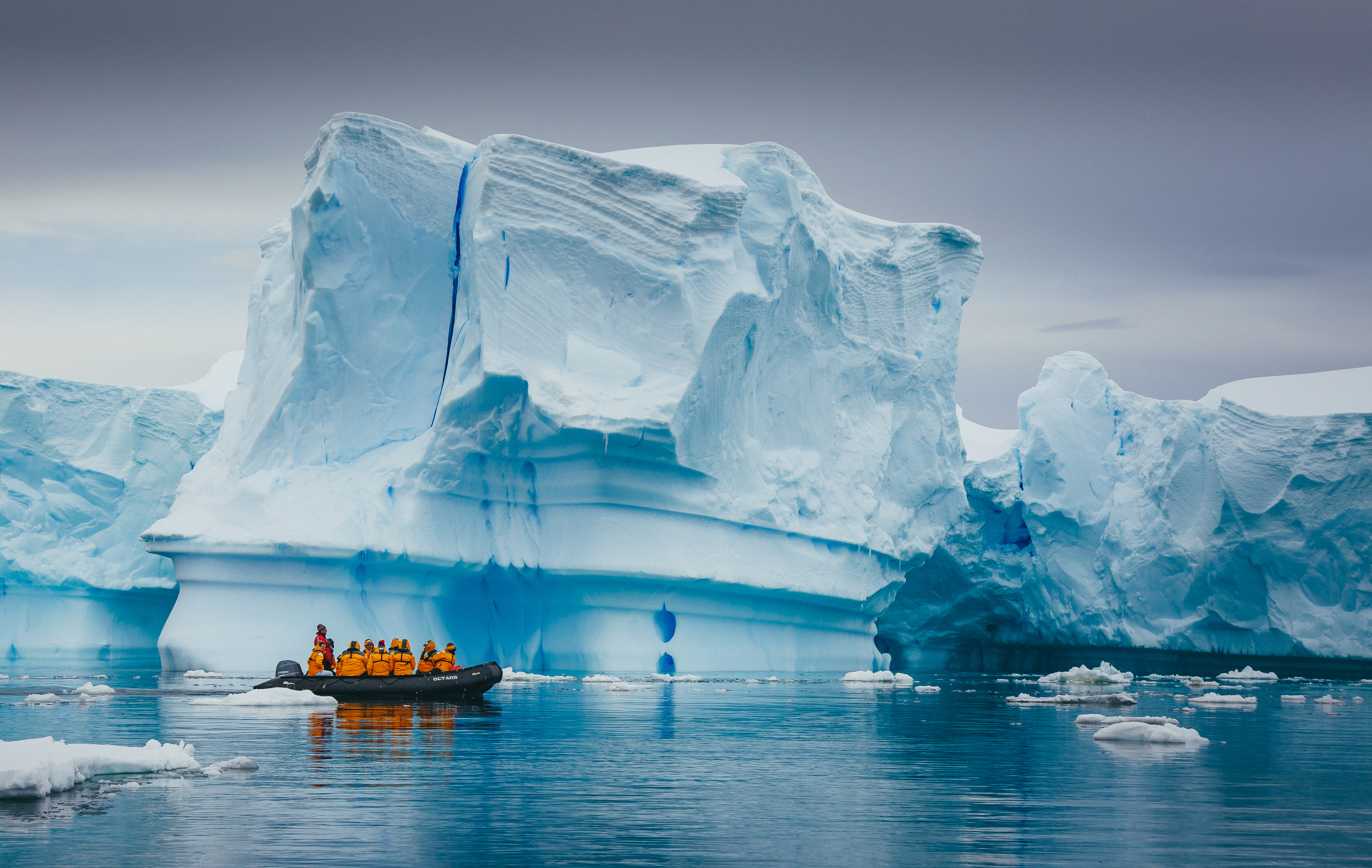
Once there, the days follow no fixed script. A morning might mean a Zodiac cruise past a colony of a hundred thousand chinstrap penguins; the afternoon, a landing on the Peninsula itself, boots on volcanic black sand with icebergs the size of tower blocks drifting past offshore. Humpback and minke whales surface alongside the boats often enough that the expedition team stops to watch rather than pressing on. Nothing here is staged for visitors - it is simply what Antarctica does, with or without an audience.
The Peninsula is at its whitest, with unbroken snow before the season's foot traffic. Penguins are pairing off and building nests, and the sea ice can still open dramatic routes further south for the ships built to push through it.
The height of the Antarctic summer. Daylight barely ends, penguin chicks hatch across the Peninsula's rookeries, and this is when availability is tightest and prices highest - most first-time visitors aim for this window.
As sea ice retreats, whale sightings peak - humpbacks gorge before their migration north. Landscapes turn dramatic as the ice breaks apart, and fewer ships means a quieter, often better-value voyage.
Every serious Antarctic expedition ship carries a Polar Class rating - a scale most brochures mention and few explain.
The Polar Class system runs from PC1, the toughest ships built to break through thick, multi-year Arctic ice year-round, down to PC7, reinforced only for light ice encountered in summer. Almost no passenger ship needs anything close to PC1 - Antarctic expedition sailing mostly happens in first-year ice, not the multi-decade pack ice further north. PC6 is the rating you will see most often on Antarctic itineraries - it covers ships like HX's Roald Amundsen and Silversea's Silver Endeavour, both built specifically for this kind of work. A small number of ships hold the tougher PC2 rating, such as the National Geographic Resolution, giving them access to icier routes when conditions allow.
None of this makes one ship's Antarctic experience objectively "better" than another's - it simply determines how much flexibility the captain has when ice blocks the planned route. Rich factors ice class into every Antarctica recommendation, particularly for later-season sailings when conditions are more variable.
A Zodiac landing is a step off a rubber boat onto a beach or rocky shore - nothing more athletic than that. Operators grade every excursion by activity level, and Antarctica regularly welcomes guests in their 70s and 80s.
Compare it per day, not per trip: a 12-night voyage typically includes every meal, every excursion, an expert expedition team and your Zodiac transport. Priced against what those inclusions would cost separately, it is remarkable value.
Antarctic summer temperatures on the Peninsula hover around freezing, not the polar blizzards people imagine, and modern expedition ships are heavily stabilised. Guests prone to seasickness can also choose a fly-cruise route and skip the Drake Passage crossing entirely.
Most Antarctic voyages also offer the Polar Plunge - a voluntary, seconds-long jump into the Southern Ocean, usually followed by a hot towel and a story you will tell for years. Entirely optional, always memorable.
All six operators Rich works with sail to Antarctica - the right one depends on your style, budget and what you want the voyage to feel like.
The hybrid-powered Roald Amundsen and Fridtjof Nansen bring a genuine onboard Science Centre to the Peninsula - the deepest research focus of any operator sailing there.
Read the Full HX Expeditions Guide →The most active, hands-on Antarctic programme available - camping on the ice, polar diving and mountaineering for travellers who want to do rather than simply observe.
Ask Rich About Quark Expeditions →The original Antarctic expedition operator, pairing every voyage with a certified National Geographic photographer and naturalist team.
Ask Rich About Nat Geo Lindblad →The Silver Endeavour carries just 100 guests in suites, PC6 ice-strengthened, with butler service and helicopters on many itineraries.
Ask Rich About Silversea →Founded by polar explorer Greg Mortimer, with one guide for roughly every seven expeditioners and twice-daily guided excursions.
Ask Rich About AE Expeditions →Seabourn Venture and Pursuit bring all-suite, all-veranda accommodation and an open bridge policy to a PC6 polar-class hull.
Ask Rich About Seabourn →Antarctica itself has no visa requirement, since no country holds sovereignty there - but you will transit through Argentina or Chile to reach your ship, so check the entry requirements for whichever gateway city your voyage departs from.
It's the destination most first-time expedition travellers choose, and for good reason - the wildlife encounters are immediate and dramatic, and every operator on this page runs well-established Antarctic programmes with clear guidance for newcomers.
Sailing gives you two atmospheric sea days with lectures and wildlife-spotting from the deck; flying trades that for two hours in the air, which suits travellers short on time or prone to seasickness. Rich can talk you through which operators offer each option.
No call centres, no account handovers - just a direct conversation with a CLIA Expedition Cruise Champion who has studied every ship on this page in detail.
Plan My Antarctica Expedition